 by
by 
The Rwanda Basic Education Board (REB) has issued official guidelines on the use of revised curricula and teaching/learning materials in secondary schools, marking a major step in the continued reform of Rwanda’s education system.
Background: Why the Curriculum Was Revised
Rwanda’s Competency-Based Curriculum (CBC) was first rolled out in 2016. After nearly a decade of implementation, REB carried out a comprehensive evaluation in 2025 to assess how the curriculum had been applied in classrooms, and to identify both its achievements and the challenges encountered along the way.
Based on the findings of this evaluation, REB began a phased revision of curricula and learning materials:
- 2025: Revised curricula and materials for primary schools were completed and rolled out starting in the 2025/2026 academic year.
- 2025–2026: REB extended the revision process to secondary schools, with the newly revised curricula and materials set to take effect from September 2026, at the start of the 2026/2027 academic year.
Key Changes in the General Secondary Education Curriculum
The revised secondary school curriculum introduces several important improvements:
- Alignment with actual learning time: Curricula and materials are now designed around the real number of instructional weeks available 33 weeks rather than the previously planned 36 weeks.
- Reduced content overload and repetition: Earlier curricula contained overlapping or excessive content that could not realistically be completed within the actual 33-week school year. This has been streamlined in the revised version.
- Age-appropriate content: Some content was previously mismatched with students’ age and level of maturity, making it difficult to understand. The revised curricula and materials are now better matched to learners’ age, ability, and maturity level.
- Updated French curriculum: The French curriculum has been specifically revised to reflect its current status as a foreign language rather than a second language, as it was originally designed. This change ensures the content matches how French is actually taught today.
Changes by Education Cycle
Lower Secondary (Cycle 1): No major structural changes have been made. No subjects were added or removed, and instructional hours remain the same. The main adjustment in this cycle is refining and adjusting existing curricula and materials to fit within the 33-week academic calendar.
Upper Secondary (Cycle 2): This cycle sees more substantial changes. The former “Combinations” system has been replaced with “Learning Pathways.” Some subjects have been added to the curriculum, and instructional hours have been adjusted for others, in line with the objectives and structure of the new curriculum.
How the Revised Curricula Will Be Used in Schools
- The revised curricula and materials have been uploaded to the REB e-Learning Platform for digital access by schools.
- They will be used for one year on a trial basis, during which continuous evaluation will take place. Any errors identified during this period will be corrected and updated.
- Schools are strongly encouraged to access and use the materials digitally via the e-learning platform rather than relying on printed copies, since continuous corrections are expected during this evaluation phase.
- All revised curricula can be accessed here: https://elearning.reb.rw/course/view.php?id=1806
- Teachers and other users can submit feedback and suggestions for corrections or improvements through this link: https://elearning.reb.rw/mod/page/view.php?id=17490&forceview=1
Who Will Use the Revised Curricula?
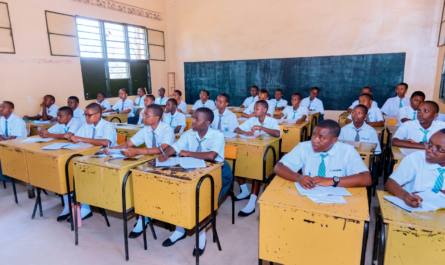
Because the Lower Secondary cycle did not undergo major curriculum changes, all students in Senior One, Senior Two, and Senior Three will use the revised curricula and materials starting in the 2026/2027 academic year. Assessments and examinations will be based on these revised curricula.
This latest curriculum revision reflects REB’s ongoing commitment to improving the quality, relevance, and practicality of secondary education in Rwanda. By aligning content with actual instructional time, correcting content overload, and adapting subjects like French to reflect real classroom practice, the reform aims to make learning more effective and achievable for students across the country.